

Websites
The 3 Things Clients Check Before They Email You
Your face, your fee and whether anyone else has been here before. They are deciding whether this will be awkward, whether they can afford it, and whether you are real.
BetterHelp pays therapists as self-employed contractors, so the gross figure is not the take-home figure. A US therapist loses 15.3% to self-employment tax before income tax even starts, and an Irish sole trader pays income tax, USC and Class S PRSI on platform income like any other self-employed earnings.

Category
Private PracticeWritten by

Danny McCabe
30 September 2026
If you are trying to work out BetterHelp earnings after tax, the honest answer is that the take-home is a good deal smaller than the gross figure suggests. BetterHelp pays therapists as independent contractors, not employees, so nothing is deducted at source and the full tax bill lands on you. In the US that means 15.3% self-employment tax before income tax is even counted. In Ireland, platform income is taxed exactly like any other sole trader income: income tax, USC and Class S PRSI, declared through self assessment.
Less than the headline rate implies, because you are self-employed and the platform deducts nothing. For a US therapist, Reframe Practice's worked example puts it plainly: at roughly $30 an hour and 20 client hours a week, gross pay is about $600 a week, and after self-employment tax of about 15.3% plus income tax, take-home lands somewhere around $420 to $480 a week, or roughly $21,000 to $25,000 a year. Those are US dollars, from US sources, and they are the only verified figures that exist. There is no published BetterHelp rate for Ireland or the UK, so if you are reading this from Dublin or Manchester, the useful exercise is not converting dollars. It is understanding how your own tax system treats self-employed platform income, which is what the rest of this post covers.
One figure, so the rest of this has something to work on. Therapist reports compiled by Reframe Practice in 2026 put live sessions at $25 to $35 an hour, clustering around $30, and 20 client hours a week at that rate comes to roughly $600 gross. Those are US dollars from US sources, and there is no verified Irish or UK platform rate. How the per-engagement model works covers where that number comes from and why the salary aggregator sites disagree with it so wildly.
Gross is where most discussion of platform pay stops. This post is about what happens between that figure and your bank account.
Because an employee's payslip already has tax taken out, and a contractor's does not. When BetterHelp pays you, you receive the gross amount, and everything that an employer would normally handle becomes your problem: the tax itself, the social insurance contributions, and the filing.
In the US, that starts with self-employment tax at 15.3%, which covers Social Security (12.4%) and Medicare (2.9%). It applies to 92.35% of net self-employment earnings, and it is charged before ordinary income tax. An employee only ever sees half of this, because the employer pays the other half invisibly. A contractor pays both halves, which is why the gap between a contractor's gross and take-home is wider than most people expect. The IRS allows you to deduct the employer-equivalent half when calculating income tax, but that deduction does not reduce the self-employment tax itself.
This is not a criticism of BetterHelp. It is how contractor arrangements work everywhere, and it is the same reason a plumber quoting €60 an hour is not earning €60 an hour. The gross rate is the start of the calculation, not the end of it.
If you are an Irish therapist earning through any online platform, Revenue treats it as ordinary self-employed income. You register as a sole trader, file through self assessment, and pay three things on your profits.
Income tax first. For 2026, a single person pays 20% on the first €44,000 of taxable income and 40% on the balance. If you are married with one income, the 20% band extends to €53,000.
Then USC. For 2026 the rates are 0.5% on the first €12,012, 2% from €12,013 to €28,700, 3% from €28,701 to €70,044, and 8% above that. You are exempt if your total income is €13,000 or less, and self-employed income over €100,000 carries an extra 3% surcharge. The official rates are on citizensinformation.ie.
Finally PRSI. As a self-employed person you pay Class S at 4.2%, rising to 4.35% from 1 October 2026, with a minimum annual contribution of €650. Class S contributions matter beyond the bill: they are what keep your entitlement to the State Pension and other benefits building while you work for yourself. The current rates are on gov.ie.
None of this is specific to BetterHelp, and that is the point. There is no special platform tax and no special platform exemption. Whether the money comes from a US platform, an Irish EAP contract, or clients paying you directly, the sole trader treatment is the same. What differs between those options is the gross rate and who controls it, and on a platform, that is not you.
The UK picture for 2026/27, per gov.uk, is broadly parallel. You have a personal allowance of £12,570, then income tax at 20% up to £50,270, 40% up to £125,140, and 45% above that, with Scotland running its own bands. On National Insurance, Class 2 is no longer payable by most self-employed people: with profits of £7,105 or more it is treated as paid, protecting your NI record, and below that you can pay voluntarily at £3.65 a week. Class 4 is the one you actually pay, at 6% on profits between £12,570 and £50,270 and 2% above that, through Self Assessment.
Again, there is no verified BetterHelp rate in sterling. Any pound figure you see quoted for the platform is somebody's conversion or somebody's guess.
Here is the comparison worth making before signing up to any platform, and it has two sides.
On the platform side, take the verified US figures as the shape of the deal, not as your rate: a per-session payment in the region of $30, no guaranteed minimum, per-word messaging that pays less per hour than it looks, and the full self-employed tax treatment of your country applied to all of it. Also read your current contract carefully before assuming anything about what happens to clients if you leave. Platform therapist agreements commonly include non-solicitation clauses and terms placing the client relationship with the platform rather than with you. I wrote about the ownership side of this in what do you actually own on BetterHelp, and the short version is that your profile, reviews and client list stay behind when you go.
On the private practice side, the tax treatment is identical. You are a sole trader either way, paying the same income tax, USC and PRSI in Ireland or the same income tax and Class 4 NIC in the UK. What changes is the top line. In private practice you set the session fee, you keep it minus a small payment processing charge, and the fee is typically a multiple of what platforms report paying per hour. The tax bands do not care where the income came from, so a higher gross at the same rates simply leaves more behind.
The platform earns its cut by handing you clients, and for someone starting out with no referral network, that convenience is genuine. But it is worth pricing honestly. The same self assessment paperwork, the same USC bands, the same PRSI contribution, applied to a gross figure you did not set and cannot raise.
If you are weighing up the private practice route, the practical steps, from registering as a sole trader to getting a website and booking system that bring in your own enquiries, are laid out in the private practice set up guide. The tax forms are the same either way. The difference is whose rate card you are working from.
Free Assessment
Take the 5-question assessment and find out in 2 minutes.
Free Download
5 things every solo therapist needs to get found online and book clients consistently.
Free Audit Call
Book a free 30-minute call. We'll review your current setup and tell you exactly what to fix first.
Blog and articles
Your face, your fee and whether anyone else has been here before. They are deciding whether this will be awkward, whether they can afford it, and whether you are real.

A Google Business Profile costs nothing and puts you in front of people already searching your area, while Psychology Today runs €19.95 a month in Ireland once its six free months end. Set up the free one first, then judge the directory by the enquiries it actually sends.
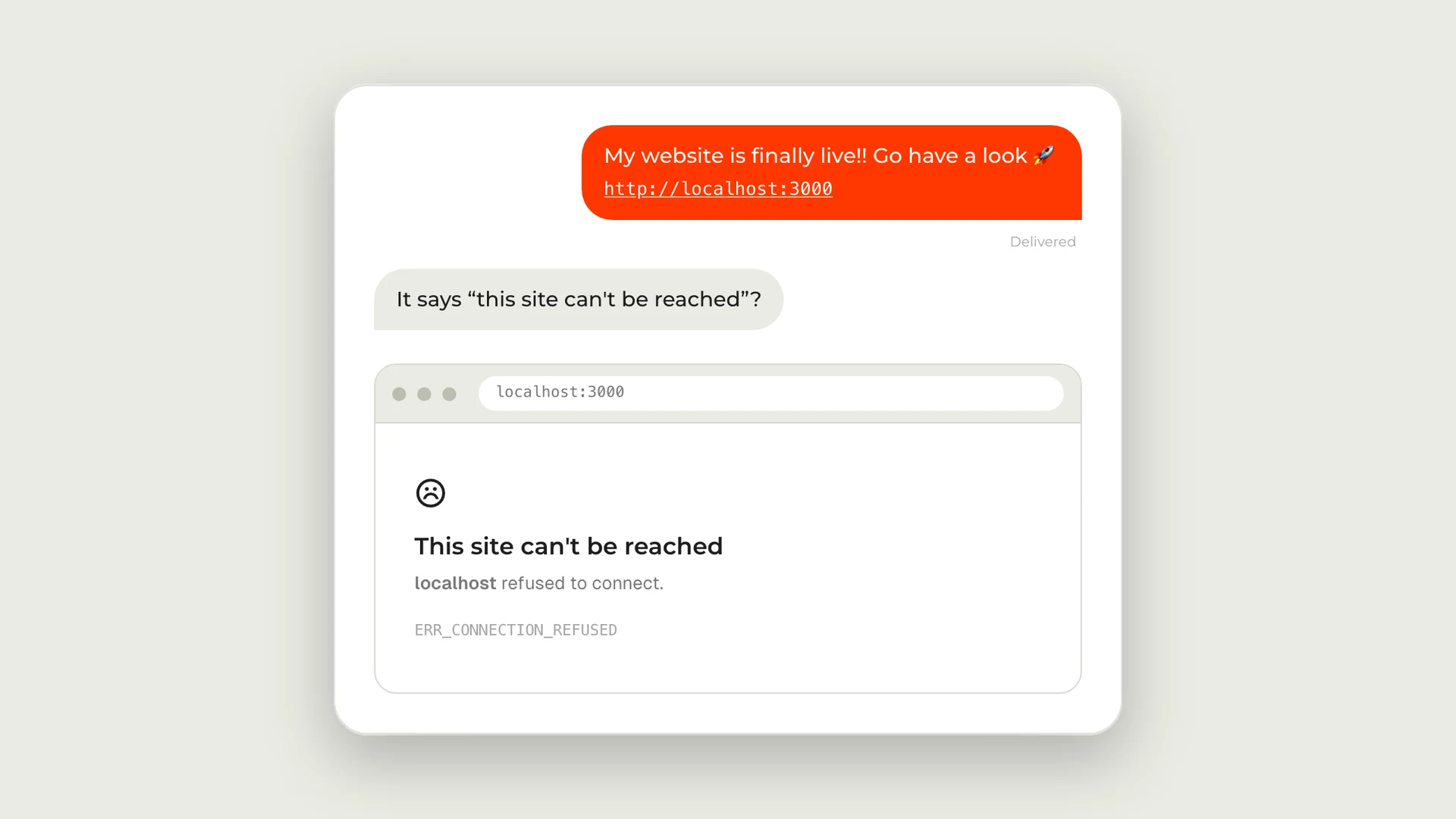
You built a site with Lovable, Bolt, v0, Claude or Cursor and it works perfectly, on your laptop. Here's why nobody else can see it, what 'live' actually takes, and the three mistakes that don't show up until weeks after launch.

Karv Web Studio uses cookies
We use cookies to improve your experience, analyse site performance, and support our marketing. You can choose what you’re comfortable with below.